How Have Gender Roles Changed Throughout History? A Timeline
Lifestyle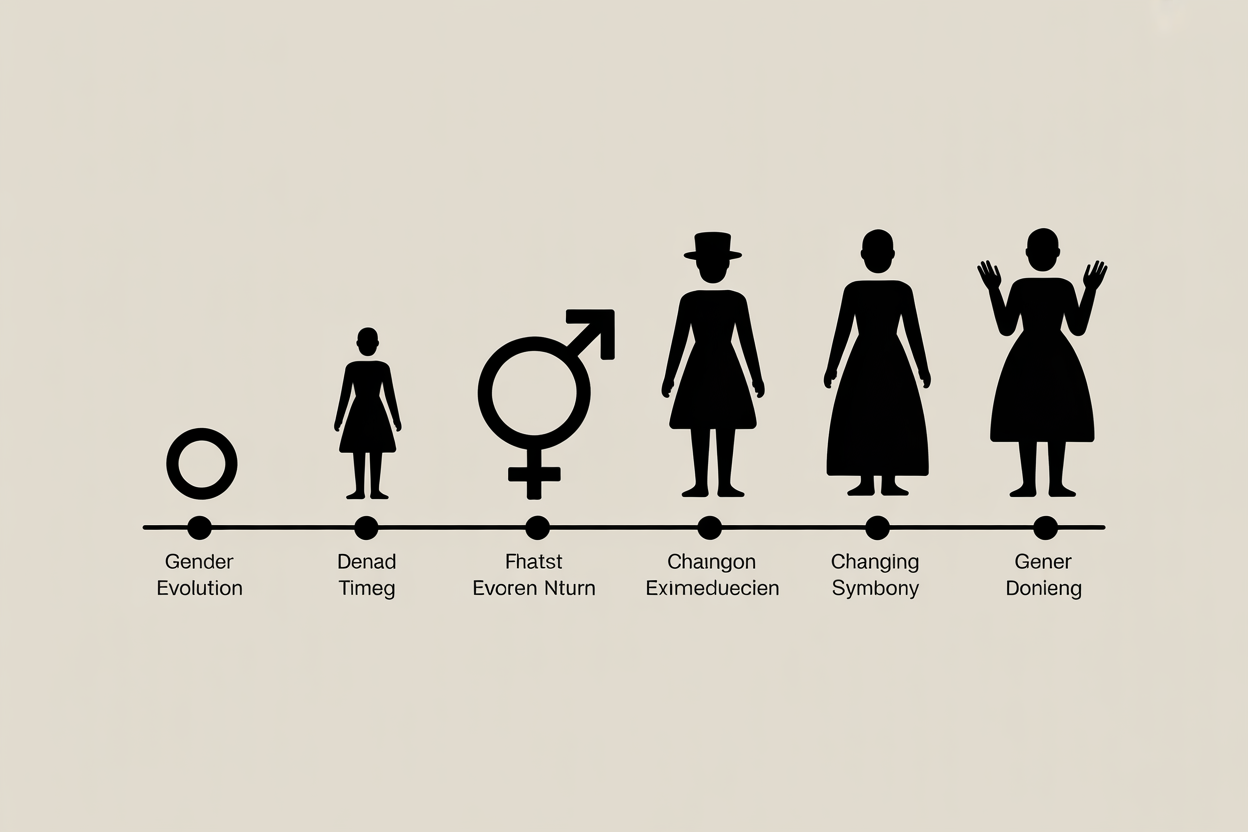
Modern life still runs on old assumptions about “men’s work” and “women’s work.” This timeline clarifies the biggest turning points: from shared survival roles in early human groups to voting rights, war work, birth control, shifts in the economy, and 2026 debates, using clear examples and key numbers so the change over time feels real and easy to follow.
Quick Timeline: Major Turning Points (Ancient Times to 2026)
- Share survival work (Paleolithic hunter-gatherers): split tasks by skill and situation, not strict gender rules.
- Recognize women’s legal and economic rights (Ancient Egypt): allow property ownership, contracts, and divorce.
- Separate home and paid work (Industrial Revolution, 1700s–1800s): push “men in public work, women at home” as the social ideal.
- Fight for political rights (Women’s suffrage, 1800s–1920): build mass movements that change voting laws.
- Enter paid work at scale (World War II, 1940–1945): bring millions of women into factories and defense jobs, then push many out after.
- Expand control over fertility (1960s onward): make long-term education and career planning more accessible.
- Shift jobs toward services (late 1900s): grow sectors where women’s employment rises and wage gaps narrow.
- Reshape “who belongs” in tech (1980s–1990s): marketing and culture shift computing toward men.
- Broaden gender and identity ideas (1990s–2000s): emphasize intersectionality and a wider range of gender expression.
- Re-negotiate work and care (2000s–2026): debate parenting roles, paid leave, harassment rules, and equal pay.
Paleolithic Era: What Hunter-Gatherer Life Actually Looked Like
The “men hunted, women gathered” story is a large simplification. Research across 63 foraging societies found that 79% reported women hunting for subsistence. Women were physically capable of endurance-based tracking and hunting. It just looked different from sprint-and-throw style pursuits that men often favored.
Division of labor was driven by skill, physical capacity, and childcare needs, not strict rules about who could do what. Women held deep plant knowledge that directly influenced camp decisions like where to move and what to eat. Men and women both made calls in their areas of expertise.
| Task Area | Who Often Did It | Why It Mattered |
|---|---|---|
| Food gathering and plant knowledge | Primarily women | Core caloric contribution, camp planning |
| Large game hunting | Primarily men, but women too | Protein supply, seasonal survival |
| Tools, shelter, childcare | Both, by situation | Kept the group alive and mobile |
Ancient Egypt: Women Had More Legal Power Than You’d Think
Egyptian women were expected to manage the household: cooking, cleaning, childcare, textile production, and animal care all fell under the “Mistress of the House” role. But their rights went well beyond domestic life.
What’s surprising here:
- Women could own property and land independently.
- Women could enter contracts and represent themselves in court.
- Women could initiate divorce (though this varied by status and era).
Women ran small businesses, sold textiles, pottery, and food, and could inherit and manage finances without a male intermediary. Some worked as artisans, brewers, doctors, musicians, and scribes.
The ceiling was political. Kings, generals, and top governors were almost always men. But priestess roles and temple roles gave some women access to education and administrative work, which was rare for women in the ancient world. Ancient Egyptian legal practice relied on customary law, private contracts, and documentary practice over millennia, rather than modern codified statutes. Documentary sources show women as buyers, sellers, and litigants in civil matters. Marriage contracts and private agreements often laid out property division rules; women could sometimes initiate divorce and retain or reclaim property under contractual terms.
Farming to Pre-Industrial Households: Work Close to Home
Before factories existed, most work happened inside or around the household. Women spun, wove, farmed, preserved food, raised children, and traded goods, all under one roof. Men worked the same land and traded in the same markets. Gender roles were practical and shaped by season, class, and family need.
The key shift happens when production leaves the home. Once factories pull work out of households and into separate buildings with wages attached, roles stop being fluid and start getting labeled. That’s the Industrial Revolution.
Industrial Revolution (1700s–1800s): When “Separate Spheres” Became the Ideal
This is where modern gender role assumptions really take root. Factories and offices pulled paid work out of homes. Men followed the wages. Women stayed with the unpaid domestic work, and society started calling that the “natural” order.
The ideal sold to the middle class: one male breadwinner, one female home manager. The reality for working-class families: women and children also worked in factories and mines to survive, then came home to do unpaid housework on top of it.
| What Society Said | What Many Families Actually Did |
|---|---|
| Men work, women manage the home | Women and children worked in mills, mines, and factories |
| Domestic work is women’s “natural” calling | Unpaid home labor stacked on top of paid shifts |
| Women are moral guardians, not workers | Working-class women were coal putters in Lancashire mines until mid-1800s |
The separate spheres ideology wasn’t just cultural. It was used to justify blocking women from voting. If women’s “influence” happened through the home, the argument went, they didn’t need a ballot.
Wage Differences and Mechanisms
In Manchester cotton mills around 1833, skilled male textile workers in senior roles earned wages comparable to skilled building trades. However, women in similar factory settings earned substantially less, with average female earnings sometimes around one-third of comparable male earnings by age 30. Child wages were often low and showed little initial sex differentiation, but the wage divergence widened with age and assignment to different tasks. Pre-industrial agricultural wages for women were also broadly lower than men’s, with female daily rates approximately 33–50% of male rates in some regions before mechanization.
Female exclusion from higher-paid skilled roles historically occurred through trade-union exclusion, workplace segregation (assigning women to lower-skill tasks), social norms, and hiring practices. Employers’ market-driven pay tied to assigned tasks and perceived productivity also contributed to these persistent wage gaps.
Women’s Suffrage (1800s–1920): Political Roles Finally Expand
The organized push for women’s voting rights in the U.S. started at the 1848 Seneca Falls Convention. Elizabeth Cady Stanton wrote the “Declaration of Sentiments,” a direct parallel to the Declaration of Independence, demanding political and legal equality. The convention was sparked, in part, by Stanton and Lucretia Mott being barred from speaking at the 1840 World Anti-Slavery Convention in London.
Key milestones:
- By 1896: Women had voting rights in Wyoming, Colorado, Idaho, and Utah
- 1910: Washington State adopted women’s suffrage; 1910 also saw the first NYC suffrage parade organized by the Women’s Political Union
- 1915: Over 300,000 women participated in suffrage activism; a transcontinental petition drive gathered more than 500,000 signatures; NYC’s suffrage parade drew 40,000 marchers
- 1916: Jeannette Rankin (Montana) became the first woman elected to the U.S. House of Representatives
- June 4, 1919: Senate approved the constitutional amendment 56–25
- August 26, 1920: The Nineteenth Amendment was ratified, granting U.S. women full voting rights
Getting the vote was a legal win. It didn’t immediately change wages, job access, or home expectations. The daily reality of gender roles moved much slower than the law.
World War II (1940–1945): The Workforce Shifts Fast, Then Snaps Back
When millions of men left for war, the labor gap had to be filled. Here’s what the numbers actually show:
| Metric | 1940 | 1944/1945 | What It Shows |
|---|---|---|---|
| Women in U.S. labor force | 11,970,000 | 18,610,000 | ~6.6M added in 5 years |
| Share of adult women employed | 28% | 37% | Major participation jump |
| Women in manufacturing | 20% | 30% (one-third of all mfg jobs) | Entered industrial work at scale |
| Female employment in defense industries | Baseline | +462% | Rapid wartime expansion |
| Married women working | 13.9% | 22.5% | Broke the “wives stay home” norm |
| Mothers with children under 10 working | 7.8% | 12.1% | Childcare norms shifted under pressure |
Pay did not follow. In 1944, skilled women earned $31.21 per week compared to $54.65 for men doing comparable work. Wage discrimination was standard practice.
Between 61–85% of women polled in 1943–1945 said they wanted to keep their jobs after the war. Most didn’t get that choice. By the end of the 1940s, more than half of wartime women workers had left the workforce. Many pushed out, others shifted into clerical, service, and sales roles instead of the industrial jobs they’d held.
1960s Onward: Birth Control and the Ability to Plan
Access to reliable contraception changed what long-term planning looked like for many women. When pregnancy could be timed and spaced, staying in school longer and building a career became realistic options.
Research connects expanded contraceptive access to increased women’s career opportunities and a narrowing of the gender wage gap over time, though the effect wasn’t uniform. Access varied by law, cost, healthcare availability, and cultural context. One pill didn’t “free everyone.” But for women who had access, it changed the math on education and work.
The first FDA approval of an oral contraceptive occurred in June 1960. Supreme Court decisions in 1965 and 1972 expanded legal access to contraception for married and then unmarried individuals, respectively. Intrauterine device options (e.g., copper IUD) appeared in the late 1960s. A state family-planning initiative from the late 2000s that expanded access to the full range of FDA-approved contraceptive methods at low or no cost led to measurable education and fertility impacts, including modest increases in on-time high school graduation (approximately a 1.7 percentage-point increase) and bachelor’s completion, as well as decreases in non-completion rates. These impacts were attributed to reduced unintended fertility and an increased ability to plan educational investments.
Late 1900s: The Economy Shifts from Goods to Services
Manufacturing shrank. Service jobs: healthcare, teaching, clerical and admin work, hospitality, finance, customer service, expanded. This mattered for gender roles because women had a comparative advantage in service work, and service work was now where the jobs were.
By the end of this period, women supplied roughly 75% of their market work hours to services, while men supplied around 50%. All net increases in women’s working hours happened in services. All net decreases in men’s working hours happened in goods production.
Result: women’s relative wages rose and gender wage gaps narrowed, not because discrimination disappeared, but because the economy restructured around sectors where women were already working.
1980s–1990s: Tech Culture Reshapes Who “Belongs” in Computing
In the early 1980s, women made up 37% of computer science graduates (1984 peak). By the end of the 20th century, men made up roughly 70% of CS graduates. That’s not a natural drift. It was driven by specific decisions.
What happened:
- Personal computers were marketed: framed as gaming and technical tools and bought by parents for sons, creating differential early exposure.
- Early exposure translated to confidence and coursework: students arriving at university with prior programming experience had a clear advantage.
- Workplace culture shifted: the computing industry phased women out of tech jobs in the 1970s–1980s, replacing them with men doing the same work under updated titles.
- “Hacker culture” took hold: long hours, hyper-competitiveness, and masculine signaling pushed many women out of environments they’d previously worked in.
The pipeline didn’t just shrink on its own. It was shaped. In the early computer era (late 1970s–mid-1980s), college enrollment in computer science programs rose sharply, with bachelor’s degrees quadrupling to roughly the low tens of thousands, peaking in the mid-1980s, and then declining by the early 1990s (a roughly 40%+ drop by 1994). Women’s share of CS degrees peaked around the mid-1980s (around the high 30s percent in peak years) before declining after the peak. This surge and decline in CS enrollment were attributed to supply limits, academic gatekeeping (e.g., rising thresholds), industry cycles, and broader consumer excitement rather than explicit gender-targeted marketing. Advertising in the early microcomputer era largely promoted low cost, ease of use, home and school applications, and career/educational benefits.
1990s–2000s: Third-Wave Feminism and Broader Ideas of Gender
Third-wave feminism moved the conversation from “equal access to the same system” toward “the system itself needs examining.” Judith Butler’s work introduced the idea of gender performativity: gender isn’t something you are; it’s something you do, and that means it can be resisted and redone.
What expanded:
- Focus widened to include women of color and transgender women explicitly.
- Race, class, and sexuality were recognized as shaping gender expectations differently for different people: a single healthcare visit, workplace interaction, or school experience can look completely different depending on intersecting identities.
- Tactics got media-savvy: street theater, online organizing, and global grassroots coalitions took the place of (or ran alongside) traditional political campaigns.
This era didn’t produce one clean legislative win. But it expanded what counted as a gender role issue, and who got to be part of that conversation.
2000s–2026: Gender Roles Keep Shifting in Work, Home, and Identity
Work and money: Dual-income households are now standard in many places, not the exception. Pay gaps persist. Hiring bias shows up in audits. Women remain underrepresented in executive leadership and overrepresented in lower-wage service roles.
Caregiving: Involved fatherhood is more visible and socially expected than it was 40 years ago. Shared household labor is discussed openly. Childcare costs drive major decisions about who works how many hours. Policy debates around paid parental leave and flexible work have moved from “niche” to mainstream.
Identity and language: Nonbinary identities are increasingly visible in everyday settings: school enrollment forms, workplace HR systems, healthcare intake paperwork. Pronoun use in professional contexts is no longer unusual in many industries.
Policy Changes and Current Status:
-
Childcare Costs:
- Federal Policy and Rulemaking: A 2024 federal CCDF (Child Care and Development Fund) final rule capped family copays at 7% of income and established grant/contract authority to support supply in underserved areas and for infants/toddlers/children with disabilities. This rule was implemented before 2026. A January 2026 HHS Notice of Proposed Rulemaking (NPRM) proposes rescinding elements of the 2024 rule, including removing the 7% family copay cap and redirecting emphasis toward vouchers. The NPRM estimated federal savings of roughly $6.1 million annually. Status: proposed; public comment period open as of the NPRM.
- Federal Funding (FY2026): FY2026 appropriations signed Feb 3, 2026, include CCDBG funding of $8.831 billion (an increase of ~$85 million), Head Start at $12.357 billion (+$85M), and Preschool Development Grants (PDG B-5) at $315 million.
- State-level Developments: Some states are cutting or constraining childcare supports amid fiscal pressure, such as pausing new subsidy enrollments or reducing provider payment rates. A state governor proposed a multi-billion-dollar plan for universal care for four-year-olds by 2028 and expanded three-year-old programs, pending legislative action.
- Costs: The estimated annual cost per child for full-time care (2024 range) is approximately $6,552–$15,600, varying by state/setting.
-
Paid Parental Leave (PPL):
- Federal (U.S.): A federal 12-week paid parental leave policy allows substitution for FMLA leave for birth or placement events within a 12-month period. Uses can be consecutive or intermittent.
- State Policies (examples effective Jan 1, 2026): Colorado’s FAMLI program expanded benefits to include additional weeks for intensive neonatal/child care needs and pregnancy complications. Delaware’s new paid leave program uses a rolling 12-month period for benefit entitlement, and exhaustion of employer-provided PTO is not required.
-
Flexible Work Arrangements:
- United Kingdom: The Employment Relations (Flexible Working) Act 2023 (effective April 2024) updated flexible-work rules, allowing workers to request flexible working from day one and requiring employers to respond within two months. Employment tribunals are scrutinizing blanket refusals for remote work, especially where protected characteristics are involved.
- United States: Recent federal guidance indicates a shift toward an “in-person default,” with remote work treated as an exception or accommodation.
- California: A state law effective Jan 2026 restricts broad “stay-or-pay” mobility clauses and limits employers’ ability to mandate certain geographic conditions.
-
Gender Pay Gap: While policy changes like paid leave and flexible work are considered relevant to gender equality, direct quantitative measures tying these policies to aggregate gender wage-gap changes are not routinely provided. Historical data shows that female exclusion from higher-paid skilled roles historically occurred through various mechanisms, including trade-union exclusion, workplace segregation, and social norms.
Three open questions still being worked out:
- How do you balance paid work and caregiving without one person, usually a woman, absorbing the cost?
- How do you design workplaces around real human lives (hours, leave, flexibility) rather than an idealized worker with no caregiving responsibilities?
- How do you respect identity while keeping rights and policy frameworks clear, in sports, healthcare, and legal documentation?
Why Gender Roles Change: 5 Drivers That Show Up Across the Timeline
- Technology shifts: contraception, home appliances, computers all changed what was possible and who did what.
- Economic structure changes: the move from farming to factories to services reshuffled who worked where and for what pay.
- Laws and policies: voting rights, labor protections, and workplace rules create floor-level change even when culture lags.
- Large shocks: wars and economic crises force rapid role changes; some stick, some reverse.
- Cultural beliefs evolve: religion, media, education, and activism all push on what people consider normal.
Fast Reference: Timeline Table
| Era | Common Expectations | What Changed | Example |
|---|---|---|---|
| Paleolithic | Flexible task division by skill | Women included in hunting; plant knowledge valued | 79% of foraging societies report female hunting |
| Ancient Egypt | Women manage household | Property rights, contracts, court access | Women could initiate divorce |
| Pre-industrial | Household-based economy | Most work tied to home, less rigid | Seasonal farm and craft labor |
| Industrial Revolution | Men earn wages, women manage home | Production leaves household; roles harden | Working-class women in mines and mills |
| Women’s Suffrage | Women excluded from politics | Legal right to vote secured | 19th Amendment ratified 1920 |
| World War II | Women as homemakers | 6.6M women enter workforce; then many exit | Defense industry employment +462% |
| Pill Era (1960s+) | Early marriage and family | Career and education planning shifts | Narrowing of gender wage gap over time |
| Service Economy | Manufacturing as male work | Women’s employment rises in services | Women supply 75% of market hours to services |
| Tech Culture Shift | Computing as male domain | Women’s CS share drops from 37% to ~30% | Boys targeted in PC marketing |
| 2000s–2026 | Dual-income households normal | Nonbinary visibility, caregiving debates | Pronoun use in workplaces, paid leave policy |
Glossary
- Gender role: the set of behaviors, expectations, and responsibilities a society assigns based on perceived gender.
- Patriarchy: a social system where men hold primary power in political, economic, and family structures.
- Separate spheres: the 19th-century idea that men belong in public/paid life and women belong in the private/domestic sphere.
- Suffrage: the right to vote in political elections.
- Labor force participation: the percentage of a population that is working or actively looking for work.
- Gender wage gap: the average difference in earnings between men and women across an economy.
- Intersectionality: the idea that race, class, gender, sexuality, and other identities overlap and shape each other’s effects.
- Gender performativity: Judith Butler’s concept that gender is not a fixed identity but something enacted through repeated behaviors, and therefore can be resisted.
- Nonbinary: a gender identity that doesn’t fit exclusively within the male/female binary.
- Service economy: an economy where the majority of jobs are in services (healthcare, education, retail, finance) rather than goods production.
FAQs
Have gender roles changed over time?
Yes, significantly and repeatedly. From flexible task-sharing in hunter-gatherer groups to rigid Victorian “separate spheres,” to women entering factories en masse during WWII, to 2026 dual-income households and nonbinary visibility, gender roles have never been static. They shift when economies change, when laws change, and when enough people push back on the current setup.
What are gender roles historically?
Historically, gender roles have ranged from relatively flexible (Paleolithic foragers, Ancient Egypt) to highly restrictive (Industrial Revolution middle-class ideals). Common patterns include assigning domestic and caregiving work to women and public, paid, or political work to men, but these patterns have always had exceptions, class differences, and cultural variations.
What has caused the change in gender roles?
The biggest drivers: economic restructuring (factory work, then service work), technology (contraception, home appliances, computers), legislation (voting rights, labor laws, workplace protections), major disruptions (wars forcing rapid role changes), and cultural shifts driven by activism, education, and media. No single cause explains the full timeline. It’s always a combination.
How has gender identity changed over time?
For most of recorded Western history, gender identity was treated as binary and fixed at birth. The third-wave feminism of the 1990s, influenced by theorists like Judith Butler, began framing gender as fluid and performed rather than innate. By the 2000s and 2010s, nonbinary and transgender identities gained broader visibility in public life, institutional language, and legal frameworks, a shift that is still actively unfolding.
